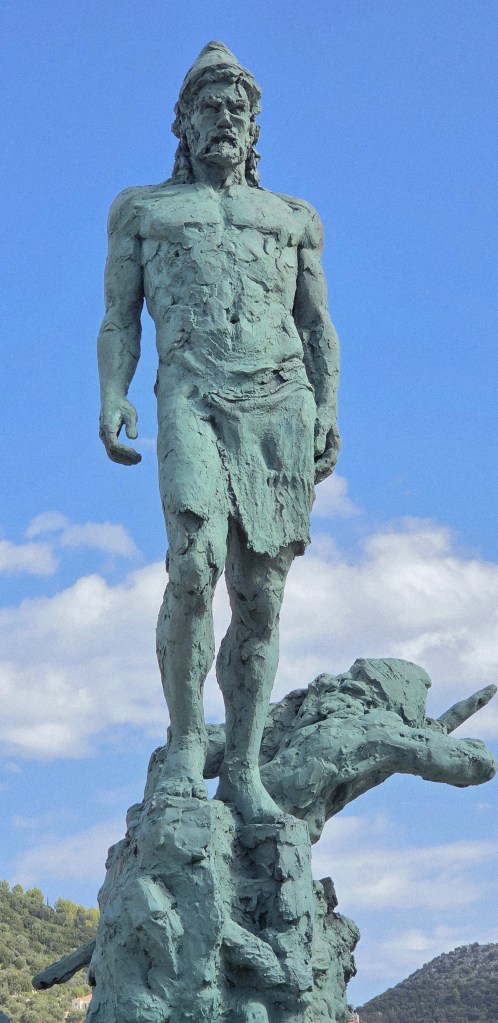
If you have been following this blog (before it was cool), you may recall that Quintessa visited Ithaca last year, and we were able to appreciate the beauty of the island where Penelope awaited her husband as he struggled to return to her following the Trojan War. Our stay there prompted us to do a bit of research on some of the places Homer’s hero wandered on his journey home. We found that we had be crisscrossing Odysseus’ wake for the better part of two years!
When we cruised the Almalfi coast of Italy, we admired Li Galli, the islands where the sirens tempted Odysseus, who only resisted their call because he was tied to the mast.
Soon after that, Quintessa spent several days sailing among the Aeolian Islands, the home of Aeolus, keeper of the winds. After visiting Tunisia, we learned that the island of Djerba, off of that country’s coast, was quite possibly the Land of the Lotus Eaters. The cave of Polyphemus, the cyclops, was said to be on the rocky slopes of Sicily below Mt Etna, near which we spent a night last spring and awoke to find volcanic ash on the deck. A place called Scheria was where Odysseus received hospitality on his final stop before reaching home; this place was most likely Corfu, where we received hospitality as we entered Greece for the first time. Odysseus’ protracted stay with Calypso (not connected to the lotus eating in the epic poem) was said to have taken place on Gozo, an island near Malta where we enjoyed an idyllic anchorage; it was easy to see why Odysseus would linger here for 10 years, with or without a beautiful goddess.
Of these places, Ithaca was the only one whose Homeric significance we realized at the time; all the others were just scenery for our journey. It was in retrospect that we discovered that we were tracing famous steps and haunting places hallowed in days of yore.
But wait—it gets better. This summer, watching Christopher Nolan’s Odyssey, we realized that we had overlooked even more than we thought. Not only did we inadvertently traverse the wake of Odysseus, it turned out we had also been stalking filming locations for the movie. That’s right: we had unwittingly taken a tour of many of the shooting sites, in the period of time after the days and weeks of filming, but before their inevitable discovery by adoring movie fans after the film’s release.
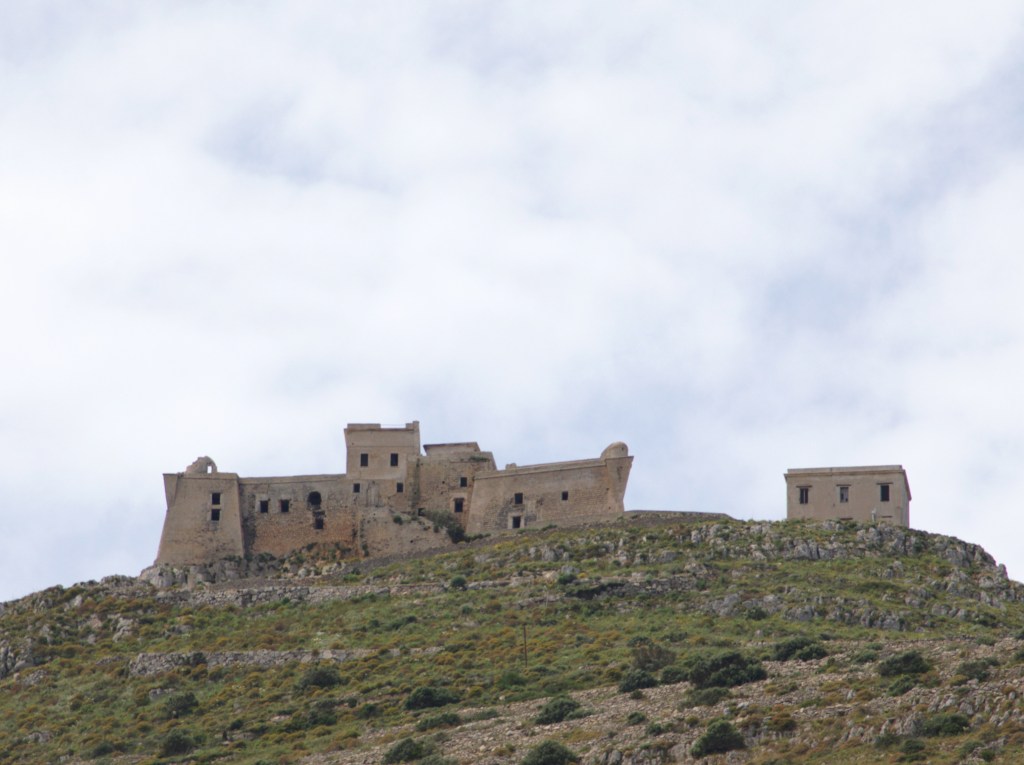
Fast forward to summer in the Pacific Northwest, and find John and me settled into our movie theater seats as The Odyssey blinks onto that huge screen. Penelope’s “palace” appears. Inside, Odysseus’ faithful wife is reluctantly entertaining suitors who want her to believe that her husband is dead. John pokes me and whispers, “We were there!” I accuse him of imagining things. Hilltop castles are a dime a dozen in the Mediterranean; no way had we accidentally stumbled upon this one.
But it was true.
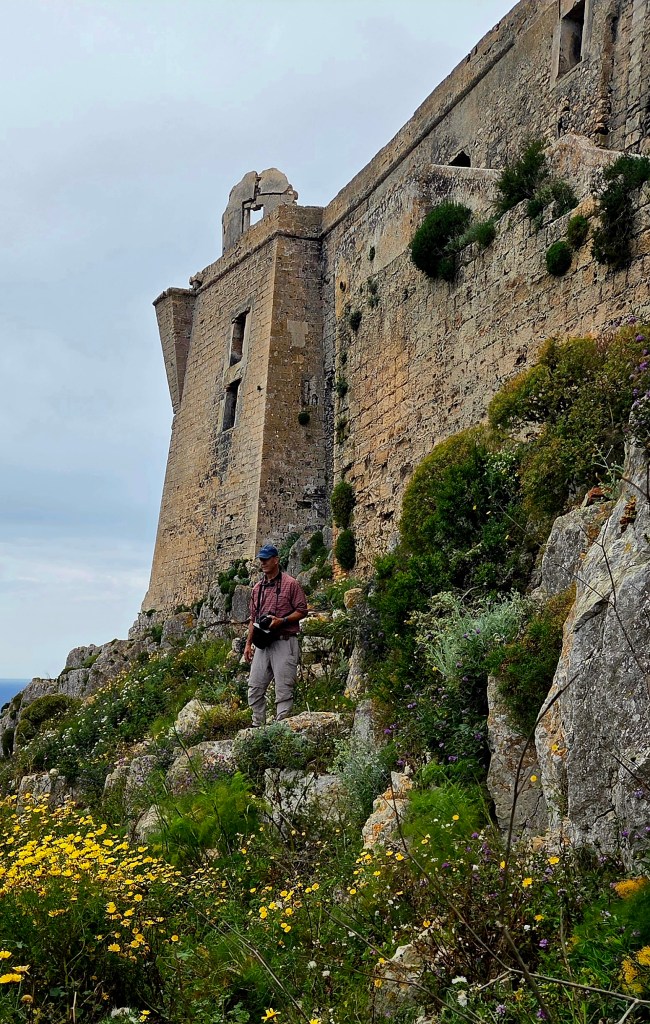
One day in April, as we prepared to cross from Sicily to Sardinia with our friends Heather and Joe, we ducked into an unassuming harbor on an island called Favignana to wait for favorable sea conditions. On our layover day we looked 1000 feet up and saw a castle on a hill, and, as one does, we decided to go up there for the view. The walk was a bit of a sweaty one; this became significant when I learned that the cast and crew had to hike up there every day to shoot. The 360 degree view from the top was impressive, but the castle ruins were nothing amazing. We just wandered around and poked inside a bit, deciding that it must have been most recently used in World War II. There was no clue that filming had happened there. In the town below, the shopkeepers and restaurant servers did not let on that their town had recently been a movie set, nor did they seem to be aware that their island and castle would undoubtedly soon be inundated with fans through the power of the Instagram gods (clearly, Hollywood did not have a grip there).
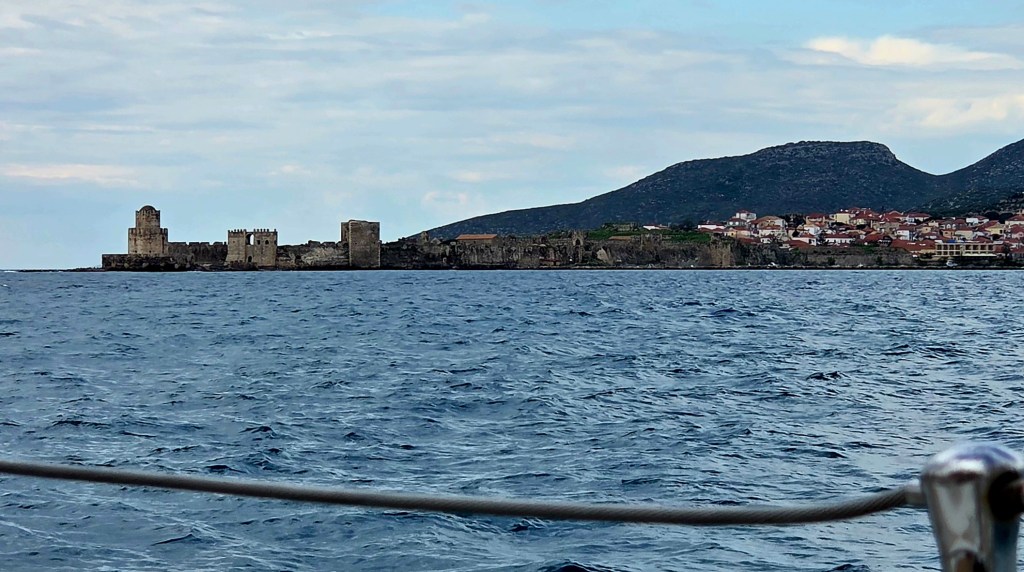
Leaving the movie theater in Portland, I began researching the filming locations, and soon discovered that not only had we traced the “real” Odysseus, we also had followed his film twin, Matt Damon. Rounding the Peloponnese peninsula, we had sailed by an enchanting edifice called Methoni Castle, where several scenes were filmed.
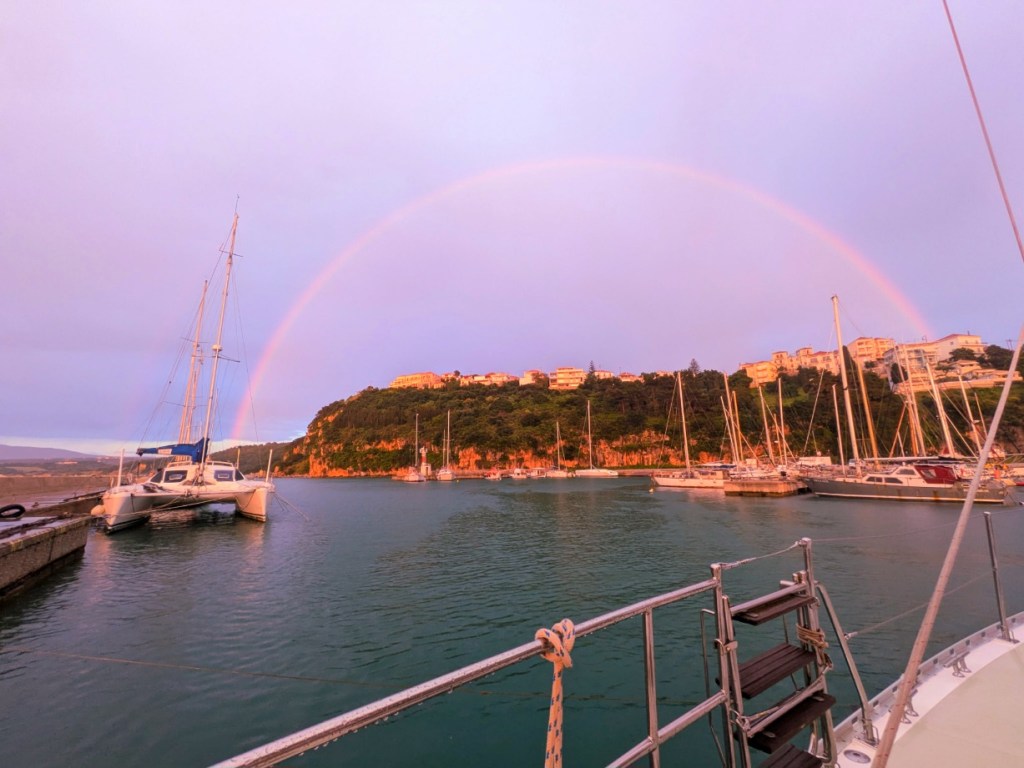
That night, we docked at Pilos in the rain. There was no filming at modern Pilos, but it is the very Pylos where Telemachus went in search of his father. We did not see Odysseus, but there was a rainbow (imagine the catamaran in the photo is Telemachus’ trireme). The following day we passed Voidokilia Beach, where Odysseus Damon and his (film) crew landed their triremes on the Island of the Cyclopes. A headland above this beach contains Nestor’s Cave, where the Cyclops scenes were recreated.
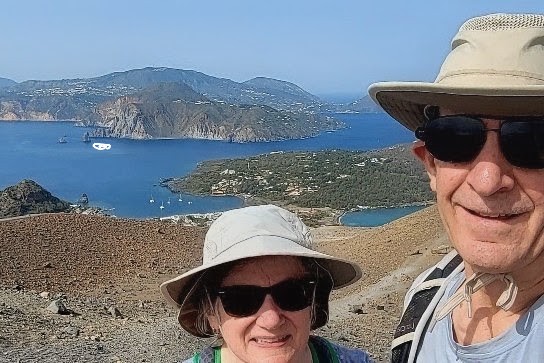
A year ago in the Aeolian Islands, we climbed up a volcano called Vulcano. In our victory selfie, you can see in the background the craggy rocks called Scoglio Spinazzola. Who knew then that this landmark would stand in as the passage where Odysseus’ ship escaped the Charybdis whirlpool, only to have the 6-armed Scylla pick crewmen right off the deck? (I drew in the whirlpool for you).
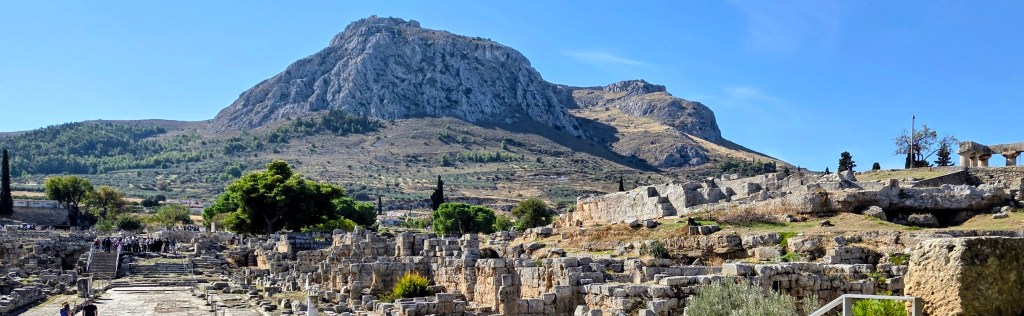
Quintessa did not visit Iceland, Norway, or Scotland, where some memorable scenes of the Odyssey were filmed. However, last year we visited Ancient Corinth and gazed up at Acrocorinth, used in the scene of the homecoming of Agamemnon. And in a few months, we plan to sail past the beaches of Essaouira, Morocco, where the movie Trojan Horse jutted out of the sand and was lapped by the surf, awaiting discovery by the soldiers of Troy.
Not one bit of this story-retracing was planned, I promise. We just learn to keep our eyes open for the unexpected. Call us accidental tourists.

Now here is a hint for anyone who has yet not seen Christopher Nolan’s Odyssey, or even if you have already viewed it. It’s a podcast. Needing to brush up on my mythology, I happened upon a series called The Rest Is History. Two historians, one of them named Tom Holland (really!), discuss historical stuff in an entertaining way. Episodes 687 and 688 consist of an amusing and slightly irreverent re-telling of Homer’s epic. It is a great listen and perfect preparation for viewing the story. It also gently reminded me that filmmakers can and do take liberties with the source material, so don’t imagine that everything in the film is true to the original. Still, I don’t begrudge Nolan a bit—the movie was quite a ride, and a heck of a lot to ponder, now that Odysseus is cool again.
Progress note: we are not quite back to the boat yet, but Quintessa’s odd Odyssey odyssey called for a special summer edition. We’ll return to Sardinia next week and resume our regular programming around the first of September.
 kateandjohnsail.boats
Leave a comment