[OohShiny is an occasional series about changes made to Quintessa this year.]
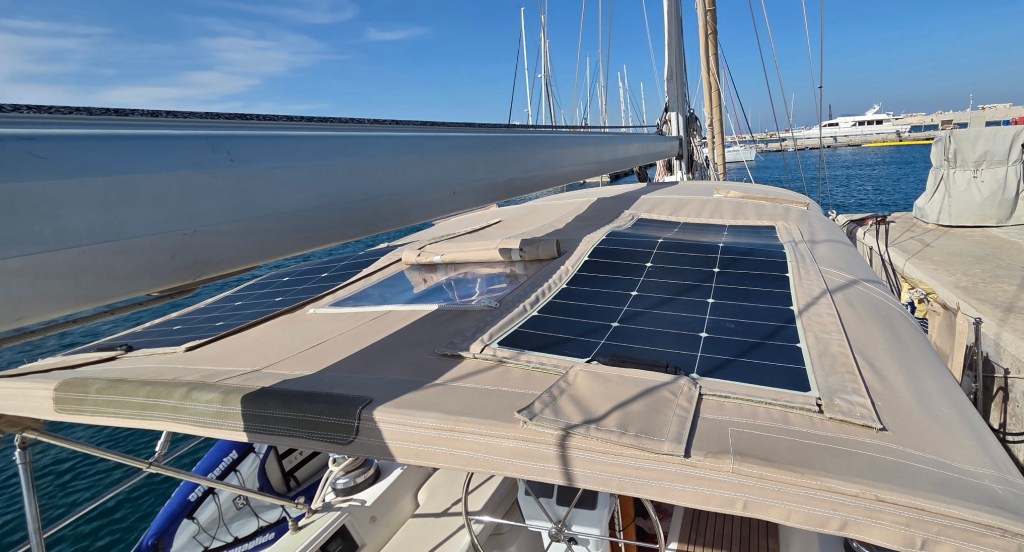
Energy is a hot topic in national and international headlines, for sure.
On a different scale, cruisers are always ready to talk about energy. On land, in the US at least, we take for granted that in some fashion we will be able to plug in to the heat, hot water, and appliances we choose to use. These amenities can all be accessible on a boat, but we’re not wired to our friendly neighborhood power plant. Our energy is stored in batteries, which are charged by the alternator when the engine runs, or can be plugged into “shore power” at a marina. Solar panels also add to the mix, as does a diesel generator that can be run if needed.
Pre-2026, Quintessa had AGM (lead acid) batteries which, though reliable, don’t readily deliver useful energy, and take a long time to charge. There was also 270 watts of solar power, available on high UV days. To run even a few high power-drawing items like the refrigerator and the autopilot, we had to monitor the battery level carefully, and often turn to shore power or the generator to keep the batteries happy.
Our vision for living on Quintessa is not to consume more energy, but to use environmentally kind forms of it, and to be more independent of the need for fuel and power.
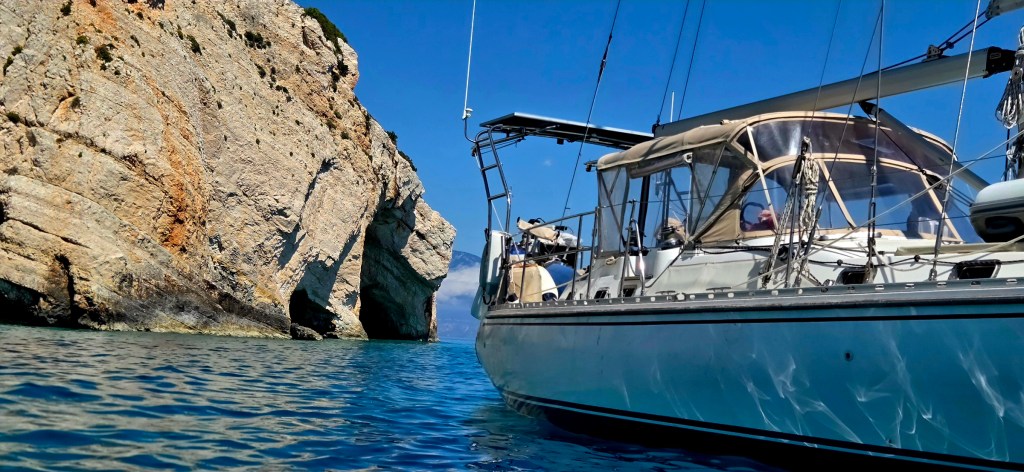
Our solar capacity, in the past, was limited by the location of the panels on the bimini (cockpit canopy). We looked at options for placing larger panels, and opted to build an arch on the back of the boat to hold them and to serve us in other ways. Now that 700 watt panel is up there sucking up the sun and delivering it to the batteries.
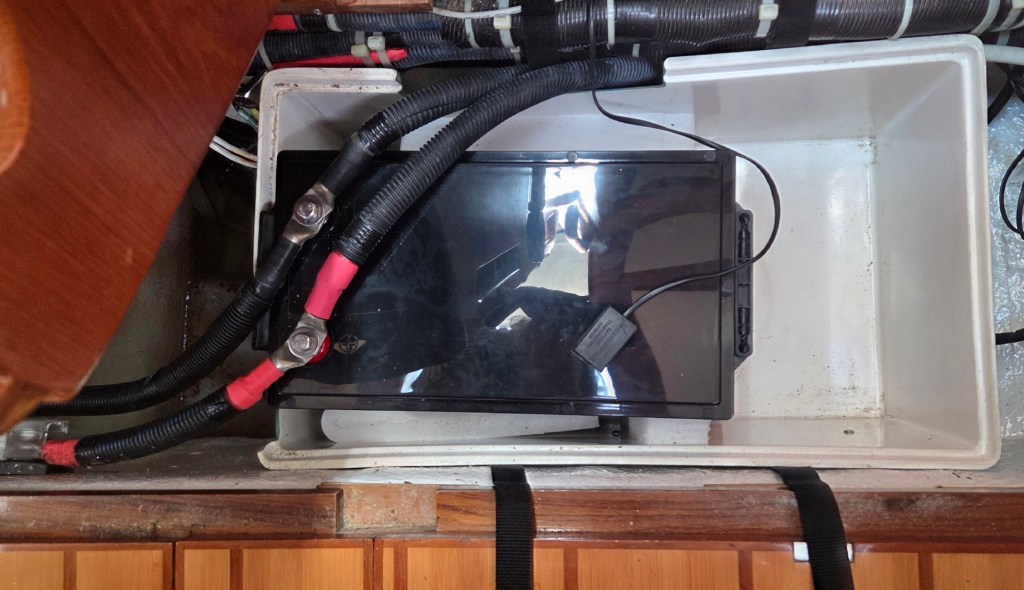
The second part of our energy makeover was to change up the batteries. We replaced the AGM batteries with lithium ferrous phosphate batteries that charge faster and deliver more energy. Never fear, these babies are the safer cousins of the lithium batteries you can’t take on the plane because they may catch fire.
These two upgrades have been, as they say, a game-changer. Even on a high overcast day, the solar panels keep the batteries topped up. Now, even at anchor, I can pull out the heat gun (for never-ending varnishing projects) or use the windlass without worrying about overtaxing the system. We can go for many days without using the engine or shore power to recharge. All very good for this wandering life.
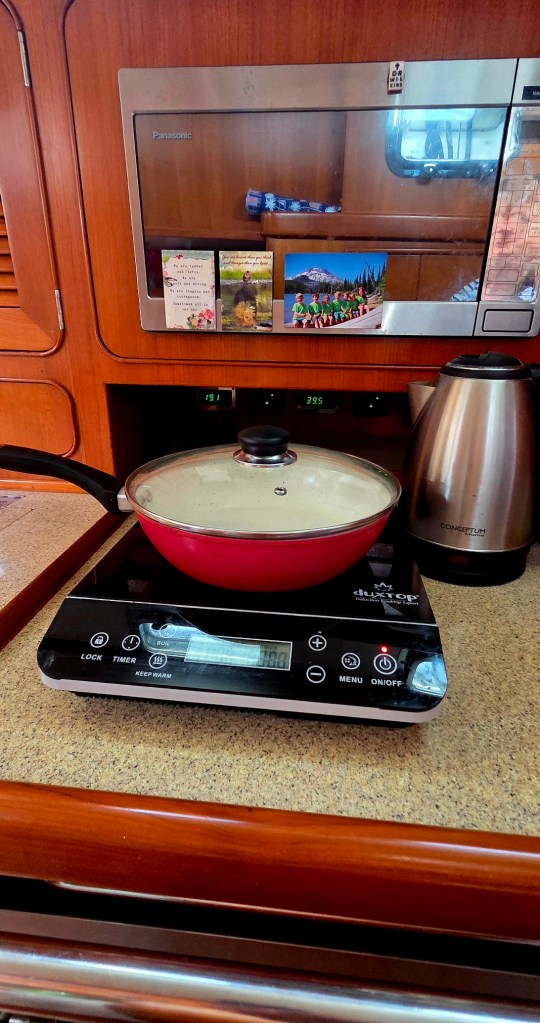
As I prepare this post, we have had an interesting energy situation. We have been enjoying an isolated coastline with no plans to go to a town for several days, and suddenly as I was cooking dinner, we ran out of propane. Not just the tank we were on, but completely out. This became an opportunity to try out an item Kate’s mother handed off to us this year—her induction hotplate and pan. Turns out that using the hotplate, a hot pot, and the microwave, we can live without propane, as long as we don’t crave toast.
Good to know.


 kateandjohnsail.boats
Leave a comment