
We were planning a family visit—twelve days with our daughter, her husband, and four delightfully squirrely children, in the spring.
“Visit Crete,” people said. “It’s always sunny there.” We did a little research and found that Chania, on the north (normally less stormy) side of Crete has a snug harbor and a welcoming old town, with easy access to the mountain hikes and beautiful beaches that the island is known for. We learned from locals that the island was in the midst of a drought that threatens the health of its famous olive trees; while we are concerned for the trees and the community, this fact had no bearing on our immediate plans.
Enter reality. Of the days that the family visited, it rained every day but two.
Beth’s family had rented an Airbnb, and we preceded them to open it up and warm it. They arrived on a dark evening in a driving rainstorm. We hadn’t seen them for months and it was a happy reunion, with hugs all around, and the joy of listening to the kids bubble over about their travel adventures. We put the weary travelers to bed and returned to Quintessa for an uneasy night, as the winds pushed us toward the sea wall the entire time we stayed there. (The bump we sustained the first night, by the way, caused no damage to the boat, but it was a constant struggle to keep the stern away from the quay while still being able to board.)
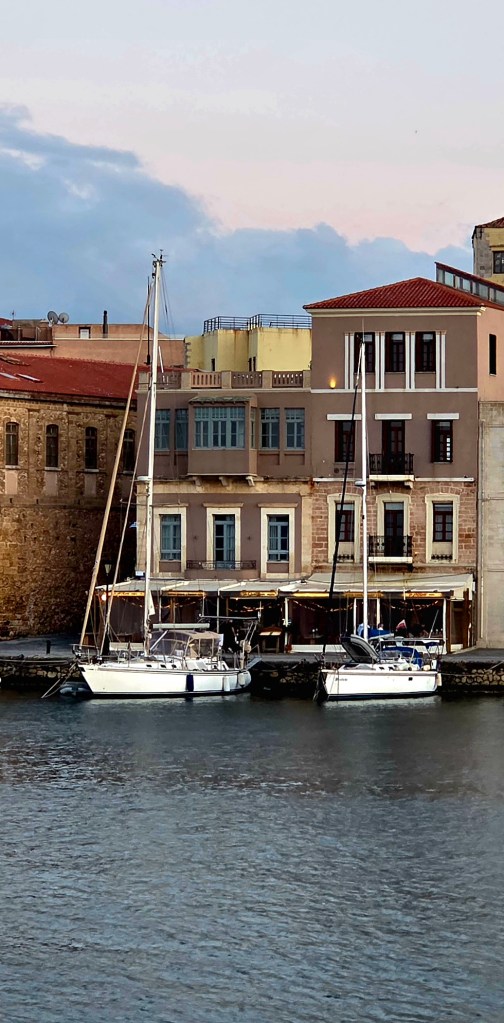
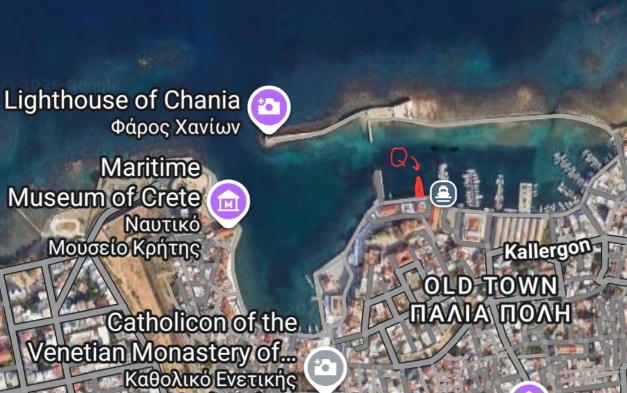
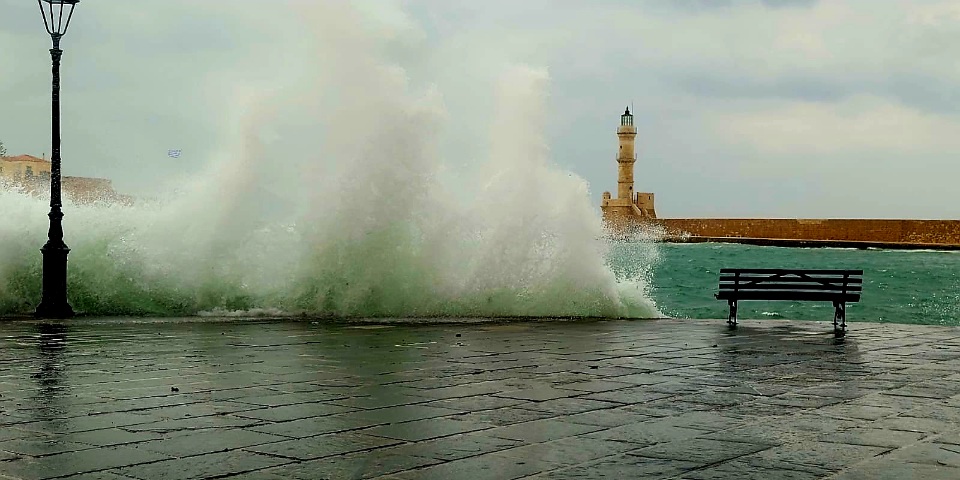
This family had never seen Quintessa in person, so this trip was a dream realized. The thing was, with the height of the sea wall and the uneasiness of the water, they couldn’t even board for three days. The outer harbor at Chania was so roiled some of the days we were there that water pounded onto the paved quay, lapped into seaside restaurants, and moved stone pavers. Fortunately, we were docked in the inner harbor that afforded more protection, although it still was quite churned up a lot of the time.
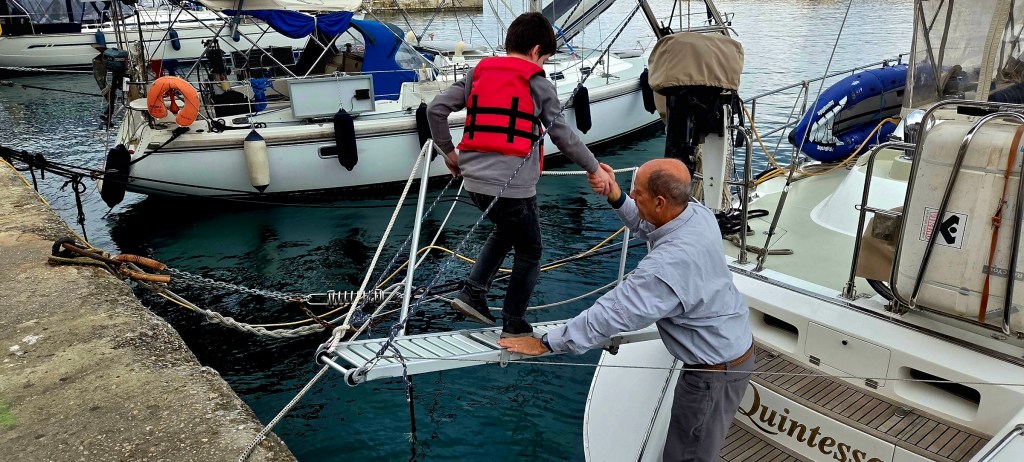
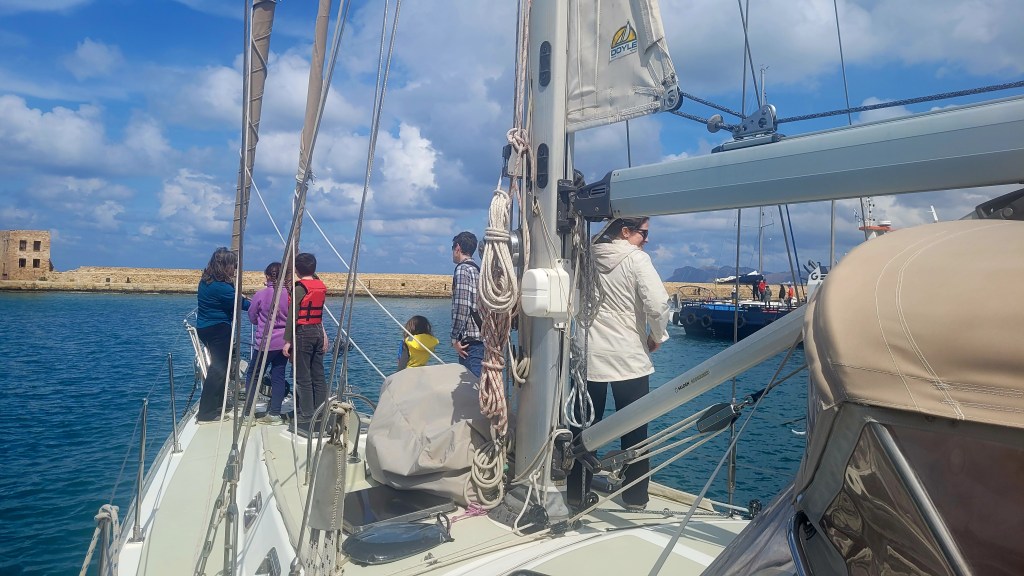
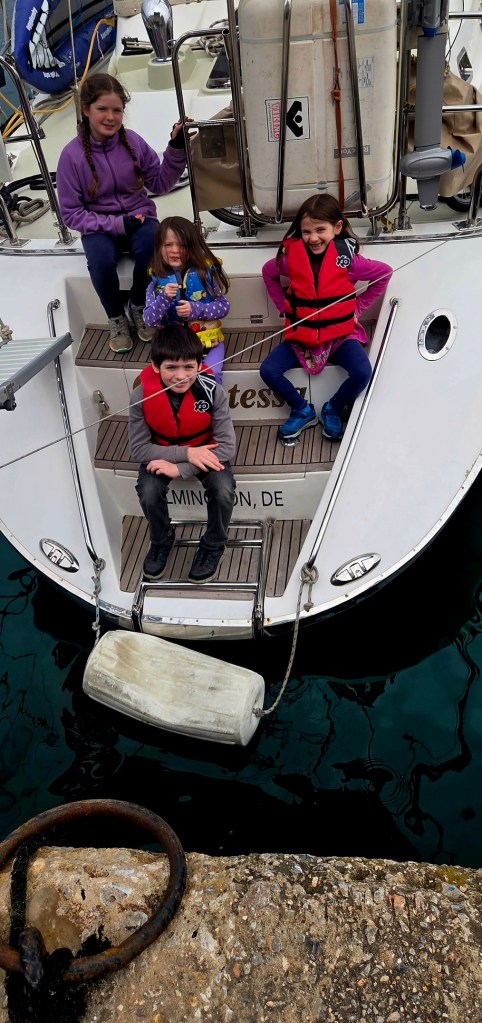
At last the day came when the family could board Grandpa and Grandma’s floating home. Each child had to don a life jacket to board and wear it on deck as they poked around and asked a thousand questions. The boat didn’t even need to leave the dock for it to be fun; a good thing, because despite the calm water in the inner harbor, the seas outside the breakwater were too spicy for family sailing.
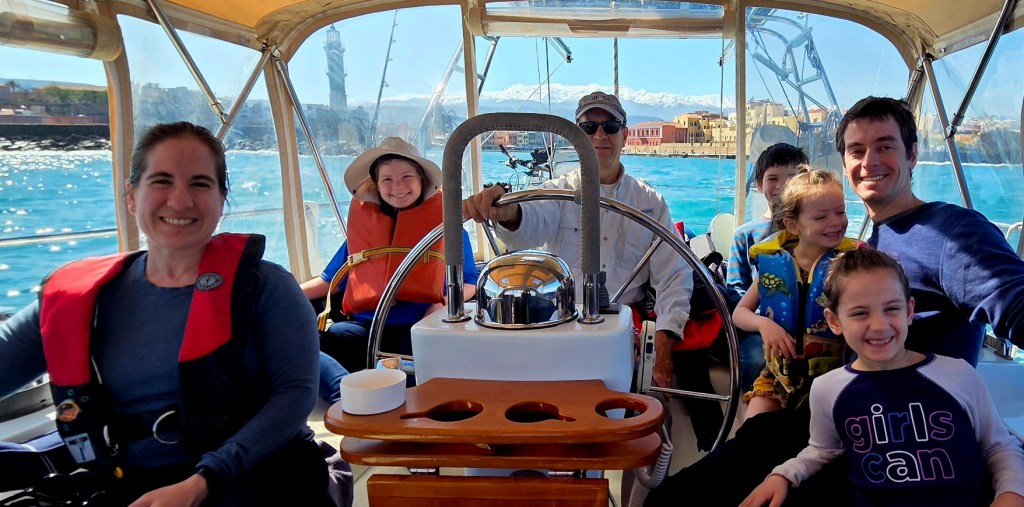
Several days later, we could board the family again and leave the harbor for a three hour tour. Because of sea and wind conditions it had to be a motoring tour, which was sad all around, because of course everyone had wanted to sail. But they loved it and it had them wanting to go again. Sadly, that day did not come during this visit because of the persistence of the storms that relentlessly pounded the island from the north.

Everyone made the best of rainy days. The maritime museum in Chania had displays and artifacts to entertain us all for an afternoon. There were shops to browse and restaurants to try. A local mother and her son curate a beautiful historical museum where the rooms are made up as a cottage in ages past, with the kitchen, weaving room and other artifacts displayed. The family drove to Knossos to visit the Minoan palace between storms.
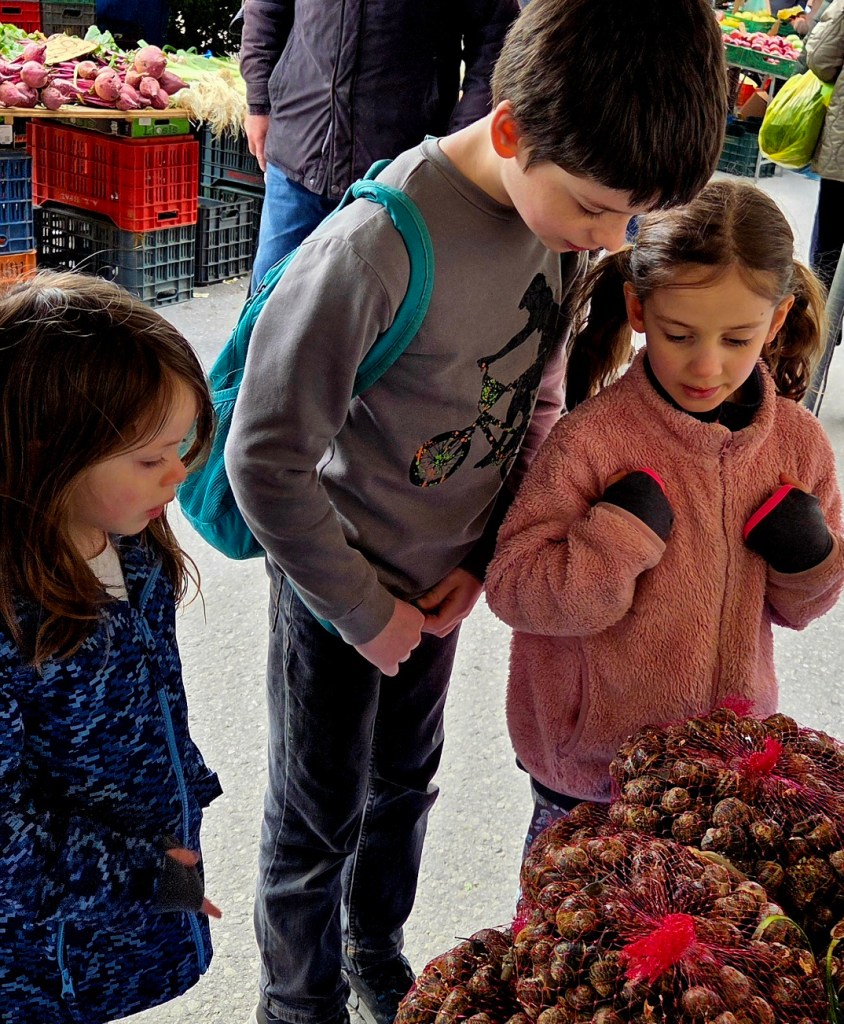
We went to the farmer’s market to buy the local offerings, look for coins on the ground, and examine fascinating live snails.
Beth literally made lemonade—from the fruit in the courtyard of their lodgings. We sent the parents away for two nights so we could buy the kids gelato as often as we wanted.
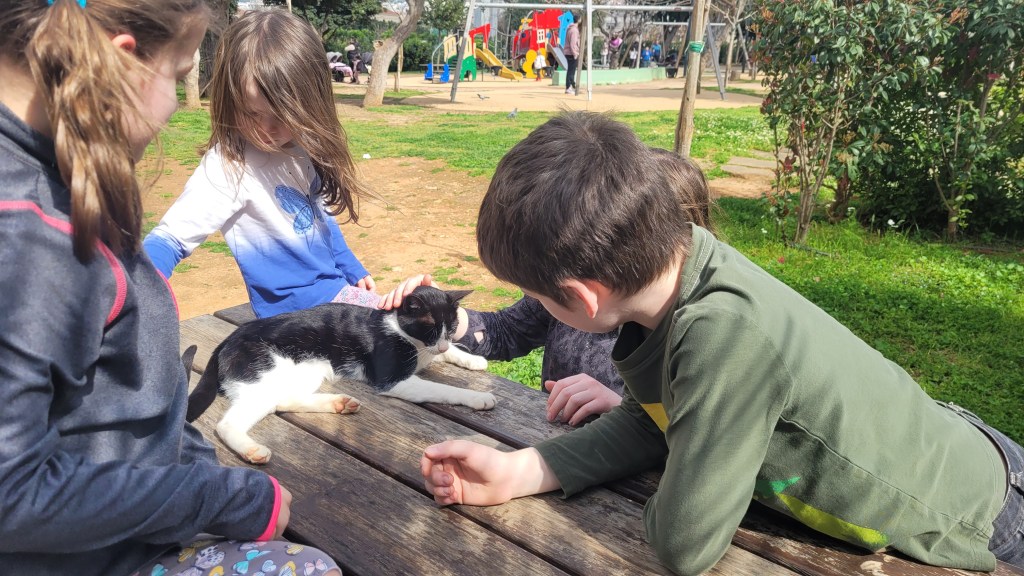
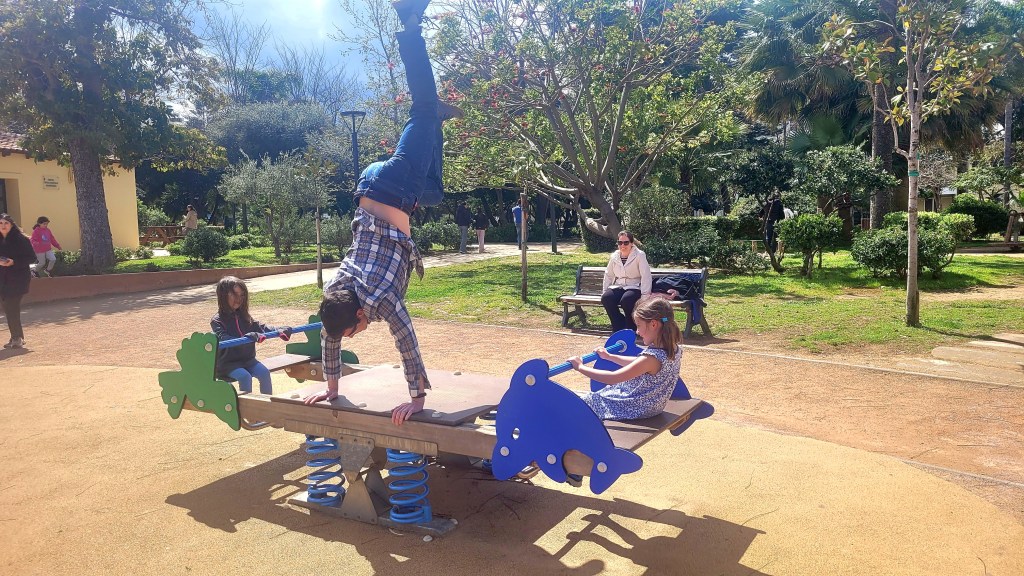
Between rain showers the kids sampled the city’s playgrounds, featuring new kinds of play equipment and an infinite number of cats to befriend and pigeons to chase.
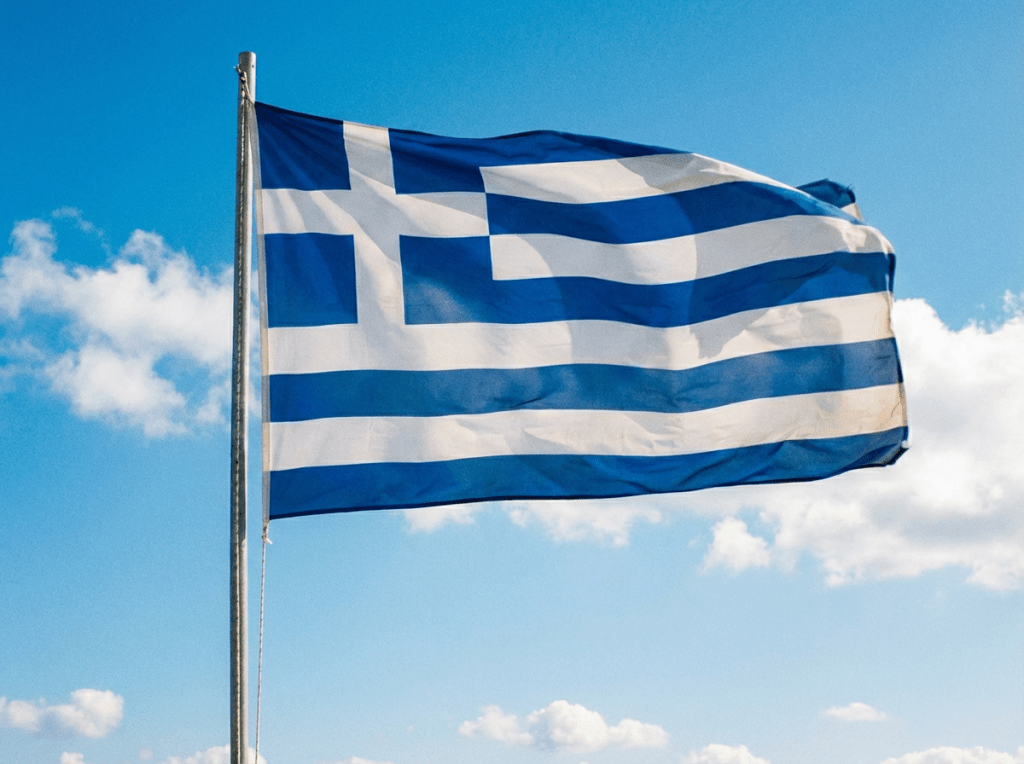
Greek Independence Day—March 25—fell right in the middle of the family visit and we anticipated really enjoying this. Last October we had celebrated Oxi Day with the residents of Syros, and looked forward to this other important holiday with its pomp, music, parade, and festivities to be shared by the entire community. We talked with many locals and could see how hard everyone was working to spruce up the town. All of the shops and restaurants were getting ready, and we asked our neighbors repeatedly exactly where and when to go see the parade. Then the weather got so thoroughly stormy that the unthinkable happened—the festivities, all of them outdoor, had to be canceled.
The grandchildren, outfitted in Greek clothing for parade watching, had to settle for re-enacting Greek tragedy indoors instead.
That afternoon we “made lemonade” by playing Yahtzee and teaching the older kids backgammon and cribbage.


Crete’s most famous hikes couldn’t happen for us, because they are located in gorges that are unsafe in stormy weather, but what about those beaches? Toward the end of the stay, we all decided to drive a couple of hours to visit Elafonissi, a beach famous for its shallow lagoon and pink sand. The drive was beautiful and we stopped at a cave that had a church inside.
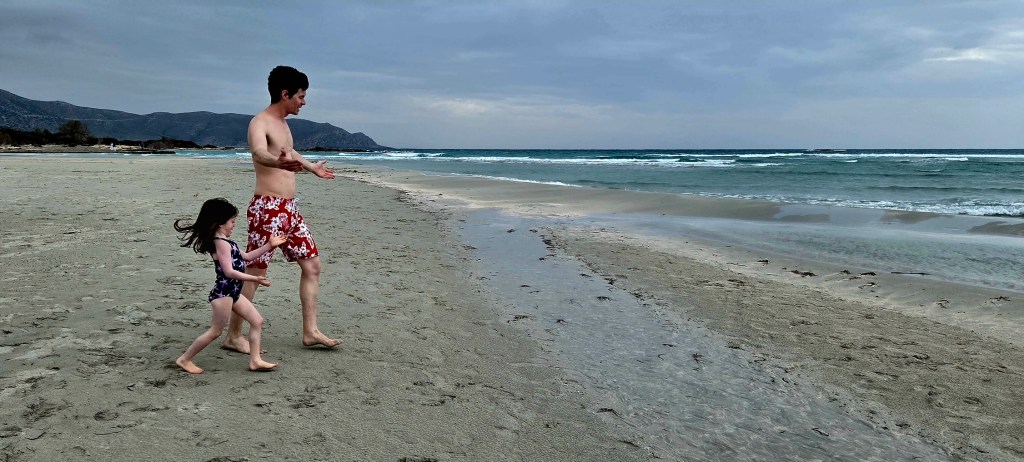
Being true Oregonians, our grandchildren believe that when you visit a beach, you go in the water. So swim they did, never mind that the air temperature was 14C (58 degrees F) and the water temperature was about the same. Their stalwart Dad joined them in the water, and of course they were the only crazy people doing this at Elafonissi that day.
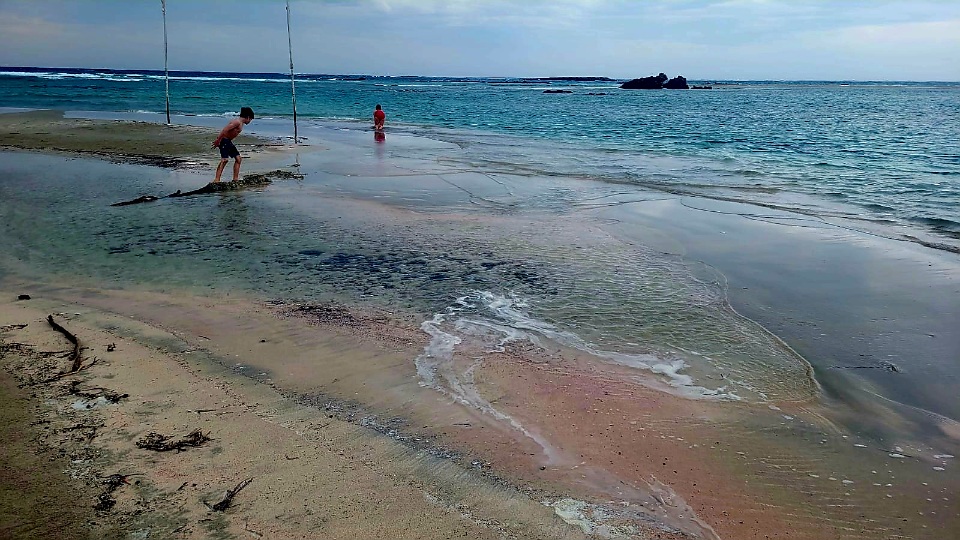
Those kids are made of hardy stuff and had a great time. Everyone got a good look at the unusual pink sand, which gets its color from crushed crustacean shells (say that three times fast).
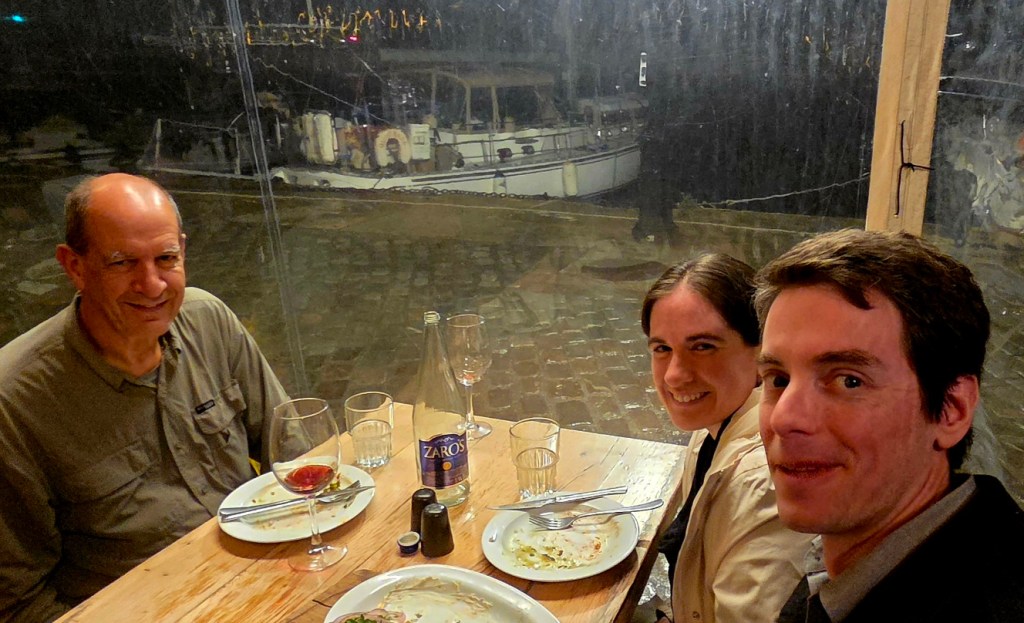
The last night in Chania we were able to do two things that we had wanted to do. The first was to have the adults eat dinner at the restaurant behind the boat, while the kids ate popcorn and watched movies on board. Then we extended the party by having the kids bunk overnight on the boat, which was a big adventure for them.
The family’s departure was bittersweet. It’s always heartbreaking to say goodbye to kids who will be bigger and more grown up the next time you see them.
We were sad for the things we had not been able to do, but we could see that the grands had gotten a taste of boat life, and they really want to return one day. It will happen, Lordwilling.
And we’re guessing the olive trees of Crete will be safe, for this year at least.

 kateandjohnsail.boats
Leave a comment