One January day in Portland I was on the phone with a friend, explaining that we were having some things done to Quintessa while we were away. Being a non-sailor, she asked me “what kinds of things would you need to do to a boat?” That launched me into probably too much detail about energy systems and engines and drive shafts and sails, after which she said, “I had no idea.” After all, it’s a boat; how complicated can it be? Some of you know… so for you who know boaty stuff and for you who don’t, I will commence a series on what we decided to change after a year on Quintessa, and why.
This boat was very well equipped and lovingly cared for when we bought her. She is of a classic, very seaworthy design, and was thoughtfully outfitted to cross oceans safely and cruise comfortably. That said, we decided to make some changes and upgrades with the objectives of being more energy independent, maintaining and enhancing safety, and being comfortable at anchor, under power, and under sail.
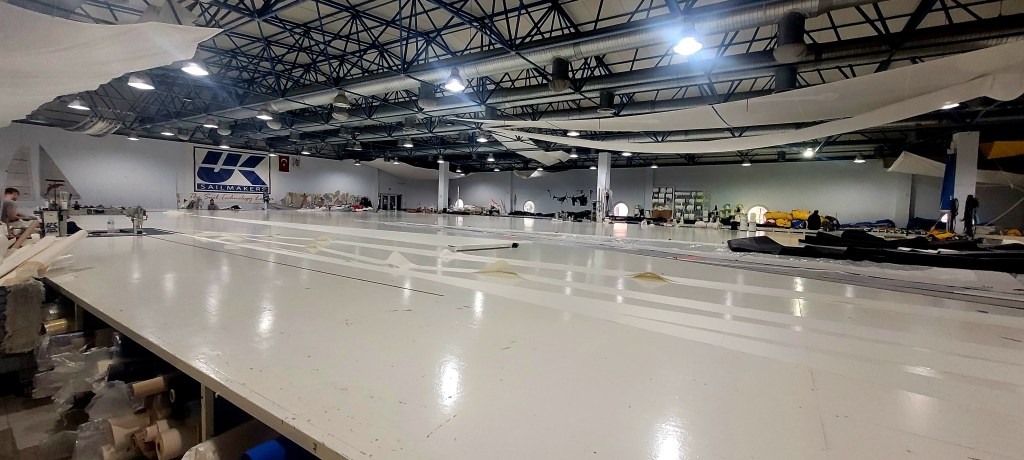
Today’s new shiny item is the foresail. Quintessa was still performing well with all of her original sails, although the two main ones were weary and stretched out. We decided to replace the foresail, a 130% genoa that has served us well. We visited the sail loft of UK Sailmakers, a company that is dedicated to sailing and the craft of creating quality sails. Being a seamstress, I was gobsmacked by the space they inhabit, which, incidentally, is the second floor of a building above an amazing, busy local farmer’s market that occupies an entire block—another story for another day. The place where the sails are cut, sewn, cleaned, and mended is amazing. The sailmakers are seated with at sewing stations that are built into the enormous table, where they do precision work.
We had to make a lot of decisions about the design of the sail, including the materials and the cut. We chose a dacron fabric and a radial cut, with special reinforcement features for ocean voyage sailing. While the original was a 130% size, we decided to reduce it to 125% to control weather helm and so it will slip more easily around the staysail forestay. It is also cut just a little bit higher for better visibility under the sail. (All of that makes sense to you who sail). The old genoa was taken down and UK Sailmakers came and very, very carefully measured for the new one (measure thrice, cut once).
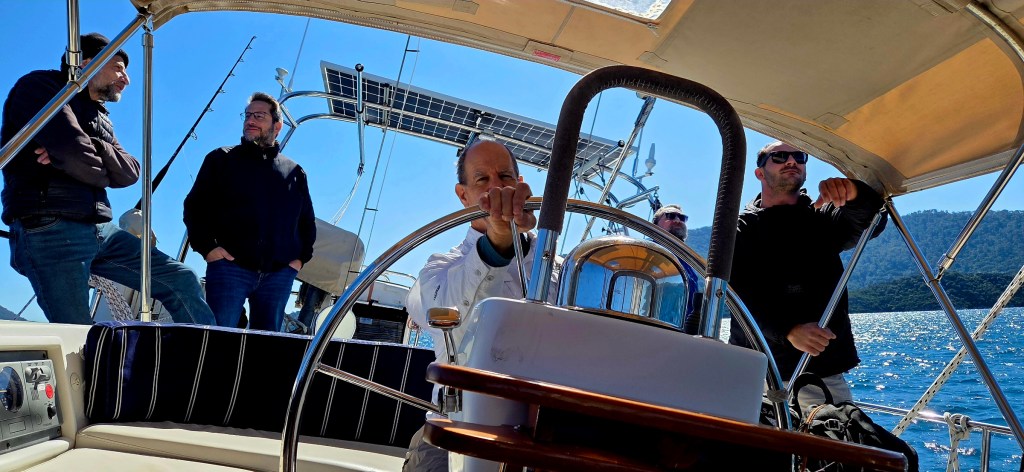
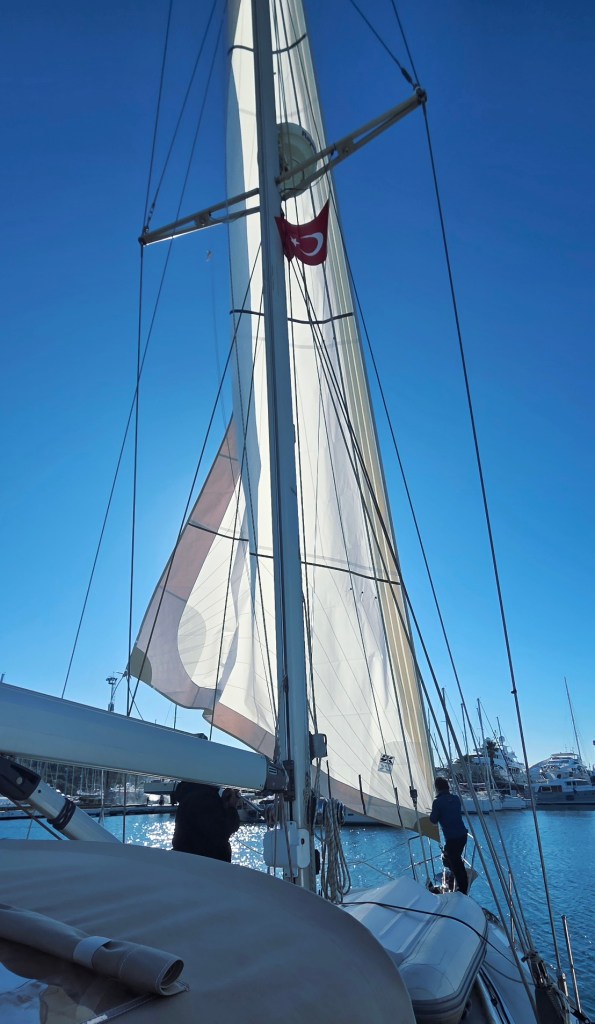
New Sail Day was very exciting. The sailmakers put up the sail at the dock in light wind. Everything fit perfectly when the sail was installed, so we scheduled the sea trial for that afternoon. The wind got frisky, and we had a great crew: three people from UK Sailmakers and also the rigger, who had put heart and soul to the task of renewing the furler and other rigging. We got out on the water of Marmaris Bay and had a short but glorious sail. John was at the helm and I didn’t have to (get to) do a thing, because these guys were so jazzed to be out there and test everything. Thumbs up to the new sail! We heard only one complaint from our new friends: “You know, you really need to replace that main. It’s stretched out.” Yeah, we know. One thing at a time.
 kateandjohnsail.boats
Leave a comment