
Well, it seems that our fall sailing season has come to an end. We are in Marmaris, Turkey for Thanksgiving week—a week to be thankful and also to prepare Quintessa for winter. This year we will have some maintenance done so she will be on the hard in the boatyard here with a few hundred other yachts. Tomorrow we will head for Istanbul and the flight to Portland. The Pacific Northwest is where we will reunite with family, church, and sailing buddies, celebrate Christmas, and of course, plan the spring itinerary and buy many more boat parts to bring back.
Portland and family are full-on intense for me so sorry folks, there will be no blogging until March unless, in a quiet moment, I pull together some of the many things that slipped by unblogged in the past months. John promises to work on some photos of some of the cool stuff from this fall, so we’ll see if that comes to pass.
P.S.
Quick update before I put this post online: boat winterization was going well, so we rented a car for a couple of days and visited two epic places in Turkey.

The site of ancient Ephesus is remarkable. Over 250,000 people once lived there when it was the second largest city in the Roman Empire and an important port city. But when it was sacked by the Goths and the port was silted in, it sat in ruins for millennia, to the point that even the amphitheater, when rediscovered, had to be excavated. All that has been unearthed so far is fascinating, and there is so much more still lying buried. We spent hours wandering the ruins and imaging what life must have been like in Ephesus’ heyday. For you biblical scholars, we are standing in the spot where in early church history Paul started a riot by daring to claim that there is a God and it is not Artemis.
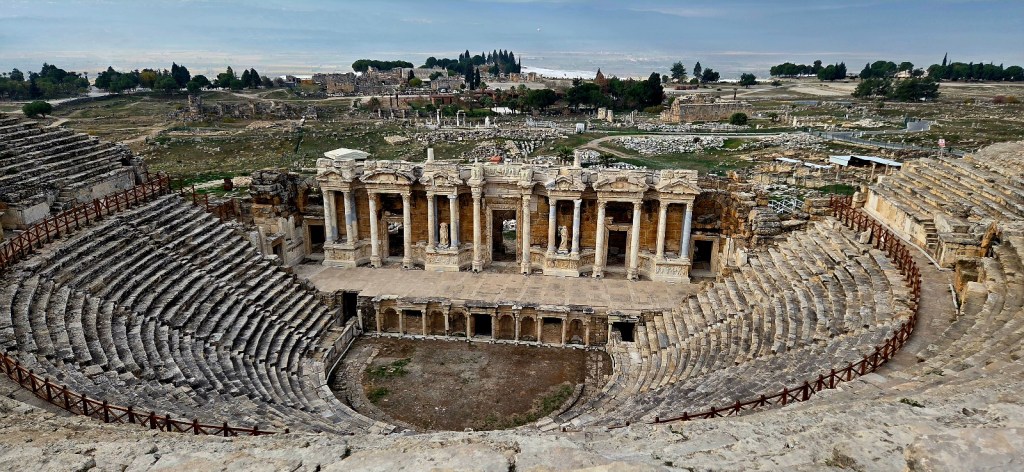
Hierapolis was kind of a sleeper for us: a place we really knew nothing about ahead of time. Another large metropolitan area, it existed because of its proximity to hot springs that were said to have healing powers and hence drew people to the area. Visiting Hierapolis was like visiting Ephesus except with even more unexcavated potential, and very sparse crowds. As you can see, the amphitheater there was breathtaking, including a reconstructed two-story stage area. There were many other buildings, and a huge necropolis with literally thousands of stone coffins, all of which appeared to have been raided over the millennia.
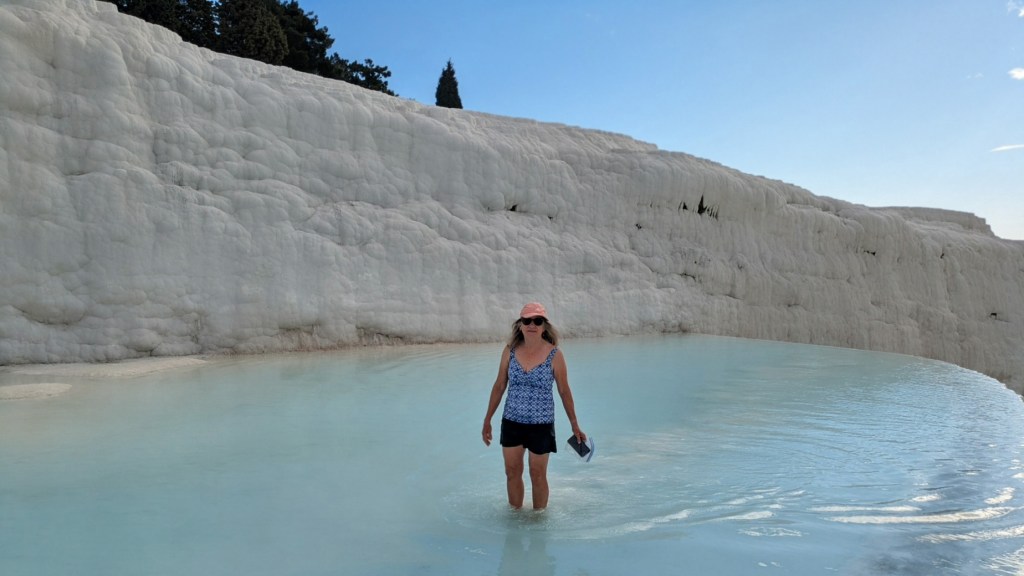
Lastly, we enjoyed the Pamukkale geothermal pools that originally brought people to the area. Walking barefoot in the beautiful travertine pools in late November, we could understand why this dreamy place has been called the Cotton Castle.


 kateandjohnsail.boats
Leave a comment