Last spring we unexpectedly realized that sailing the Med meant that we could have a front row seat to quite a bit of volcanic activity: we viewed Vesuvius looming over Pompeii, buzzed glowing Stromboli at night, climbed to the mouth of the original Vulcan’s blacksmith shop, and parked the boat under a smoldering Etna. Months and miles later, we have found ourselves another volcano to explore.

The best time for a land excursion is when the sea is being ugly. This being November, the wind began to blow 30-40 knots this week and whip up some 2 meter seas in the Dodecanese. We found shelter in a charming town harbor on the island of Nisyros, which is most famous for being a volcano. With Quintessa safely stowed, the obvious thing to do was rent a car and head for the crater.

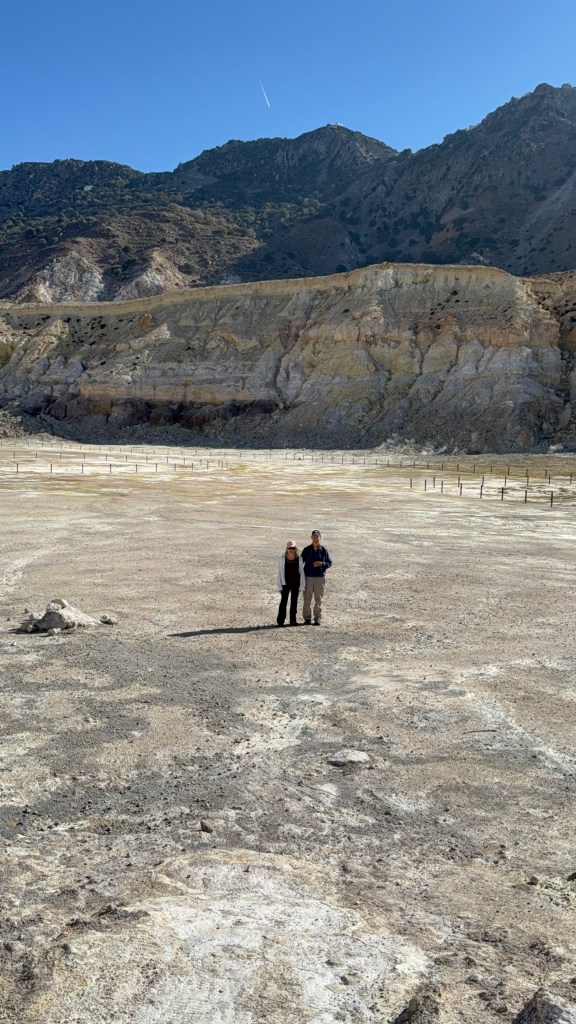
Having the craters and lava fields all to ourselves this particular day, we explored otherworldly terrain featuring cinder cones, steaming fumeroles, and other colorful features that we could see, feel, smell, and even hear.
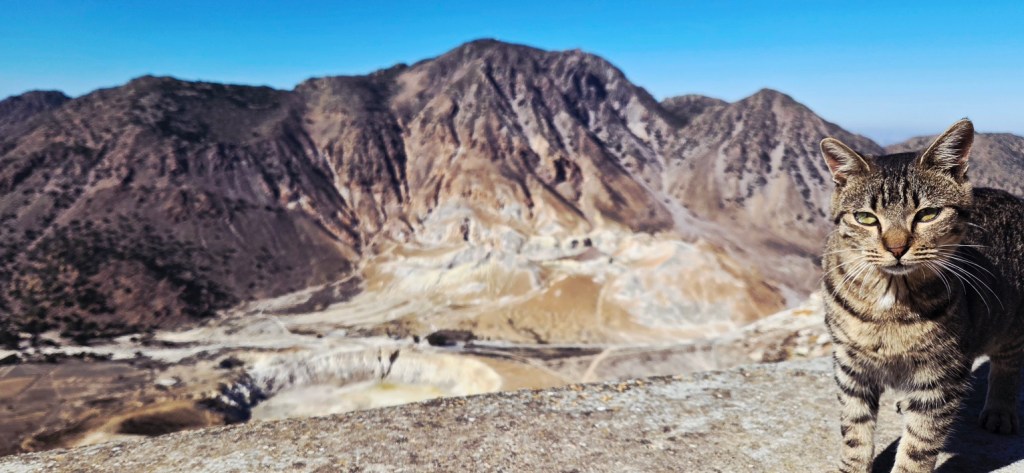
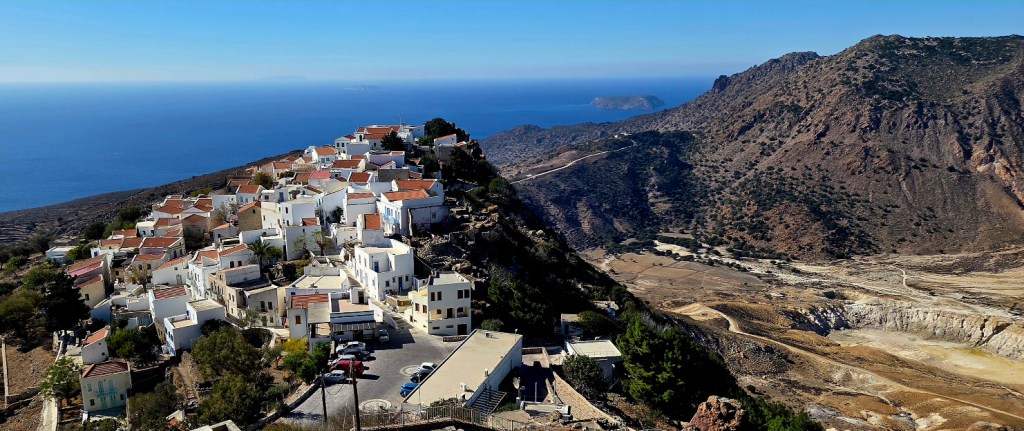
After visiting the crater, we drove up, up, up to an enchanting white and blue town called Nikia, and wandered its winding streets, peeking into garden courtyards and crooked alleyways. We saw no other travelers and very few residents in the town, but when we reached the city wall, this resident cat pointed out to us that Nikia has the unique distinction of being perhaps the only town on the planet that has its own view into a geothermally active crater.
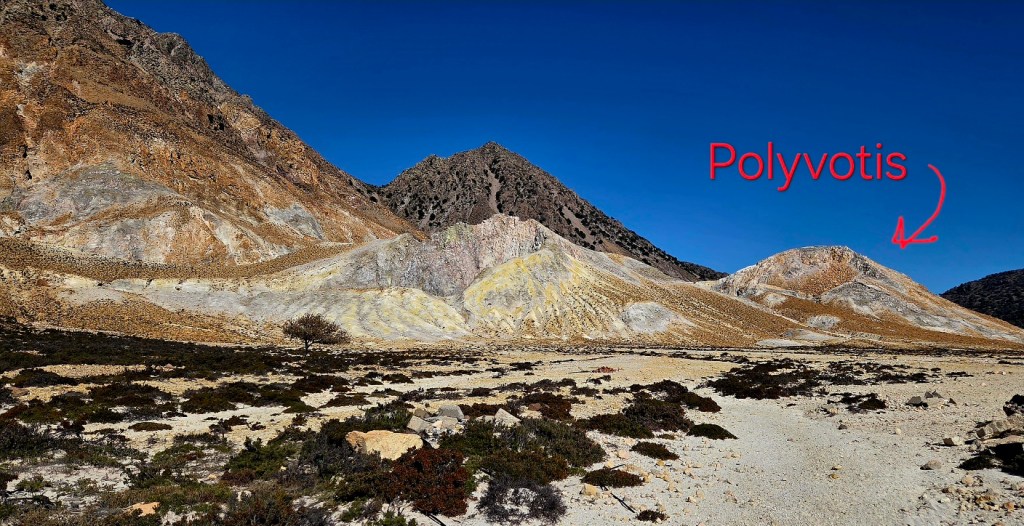
Now for the mythology of Nisyros: it seems that the island was created during the Giantomachy, or battle between the gods and giants. When Poseidon threw a piece of the island of Kos at the Giant Polyvotis. Polyvotis was crushed, and Nisyros was formed. Polyvotis is said to still be causing the earthquakes on the island, and one of the volcanic craters bears his name.
 kateandjohnsail.boats
Leave a comment