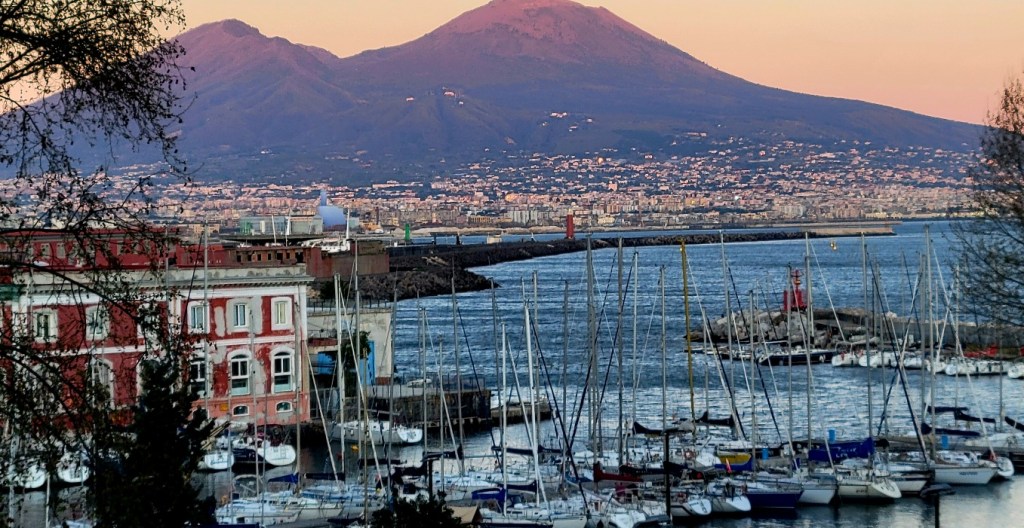
When we pulled up near Mt. Vesuvius last week, we had no idea this would be the beginning of a volcano tour. We visited Pompeii, awed at the destruction of a city that happened in one day in 79 AD when the mountain next door blew up. Then we strolled through Herculaneum, which experienced the same devastating eruption, but was preserved more completely due to the nature of the pyroclastic flow.
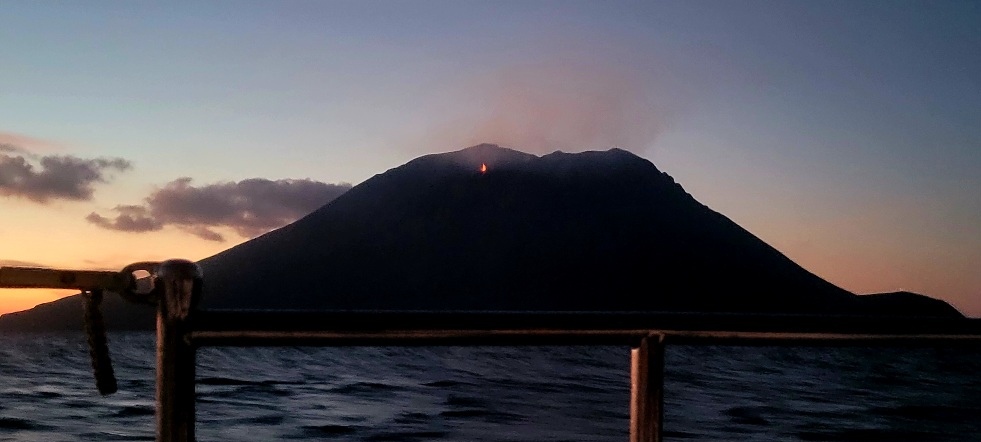
Leaving Naples, we scheduled a nighttime passage with the express intention of passing by Stromboli. This island is the very essence of what many think of as a “volcano;” it rises, pointy-shaped, from the sea, and spews lava. Arriving later than we had hoped, we were still able to see lava spurting upward from the slopes as dawn began to light the sky.
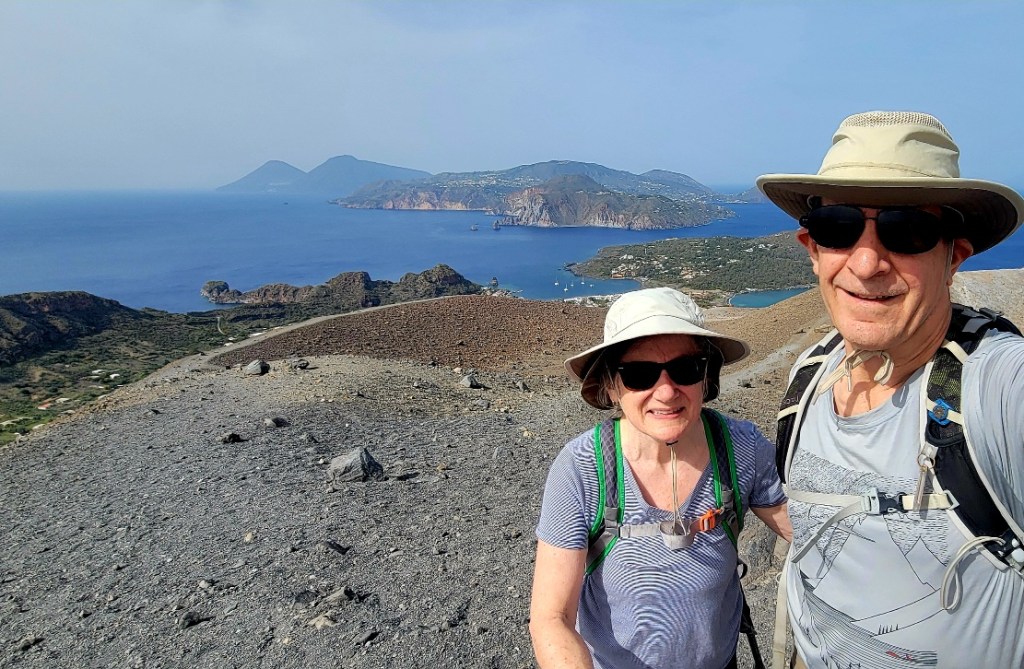
Thinking our volcano experiences were behind us, we continued southward toward Sicily. One day we looked at the weather and realized it was time to head for a safe place that would provide protection from a forecasted southeasterly gale. John discovered this great little harbor called Porto di Ponente. Anchored in the harbor, I glanced at the chart and noticed that the island was named Vulcano, and indeed, a large, conical mountain loomed above us, spewing fumes from vents in the sides. It being only noon, we rowed the dinghy to shore and found the trail up a thousand feet to the crater rim. Yikes! Memories of the rim of Mt Saint Helens: it was windy, steep, and sandy. But what a view! (Pinch in behind Kate’s hat to see Quintessa in the harbor.) And this was Volcano 1.0, the original beside which other volcanoes are mere wannabes. The Romans believed it was the chimney of Vulcan, Roman god of fire. Certainly the smell of the sulfur fumes steaming from vents in the mountain must have suggested the existence of a great foundry beneath. All we know is that the following morning, we found the boat was covered with a light coat of ash; thank you, Vulcan.
Is this the end of the tour? Hopefully not. Maybe in a in a week or so we will anchor off of southern Sicily and watch Etna blow like a Roman candle. Stay tuned.


 kateandjohnsail.boats
Leave a comment